
Matcha vs Coffee: How Much Caffeine & Why It Matters. Compare caffeine content, health benefits of green tea vs drink coffee. Choose your best caffeinated drink.
Coffee vs Matcha: Caffeine, Energy, and Health Benefits Compared
For millions of people, the day doesn’t officially start until that first sip of caffeine hits. But in recent years, something interesting has been happening — more and more coffee drinkers are swapping their morning cup for a vibrant green alternative: matcha tea. Because the caffeine in coffee is absorbed rapidly and isn’t moderated by L-theanine, the stimulation can feel abrupt.
This shift isn’t just a trend. It’s part of a growing awareness around how different sources of caffeine affect your energy, focus, and overall well-being. So, when it comes to matcha vs coffee caffeine, what’s really the difference — and which one gives you the better energy boost?
Let’s explore everything you need to know, from caffeine content and health benefits to the science behind how each drink makes you feel.
What Exactly Is Matcha Tea??
Before diving into the caffeine comparison, it helps to understand what matcha actually is. Matcha is a finely ground green tea powder made from shade-grown tea leaves — specifically, from the Camellia sinensis plant, the same plant that gives us black and oolong teas.
What makes matcha unique is how it’s produced. The tea bushes are shaded for several weeks before harvest, which increases chlorophyll levels and boosts amino acids like L-theanine. After picking, the leaves are steamed, dried, and stone-ground into a vivid green powder.. known as matcha powder!!!
Unlike regular tea, you don’t steep and discard the leaves; you consume the entire powdered leaf. That means you’re getting every bit of nutrient, antioxidant, and — yes — caffeine that matcha contains.
A single cup of matcha typically contains around 60–80 mg of caffeine, depending on the grade and how much powder you use.
What About Coffee?
Coffee, on the other hand, comes from roasted coffee beans — the seeds of the Coffea plant. It’s the world’s most popular beverage after water, and for good reason: it delivers a fast, potent caffeine punch.
A standard cup of coffee contains about 95 mg of caffeine, though that number can vary widely depending on the bean, roast, and brewing method. Espresso has the highest concentration, while cold brew and instant coffee can range anywhere from 60–200 mg per serving.
Coffee gives an immediate energy boost, which makes it ideal for jump-starting your day — but that same rush can also lead to jitters and an inevitable crash later.
Matcha vs Coffee: How the Caffeine Works
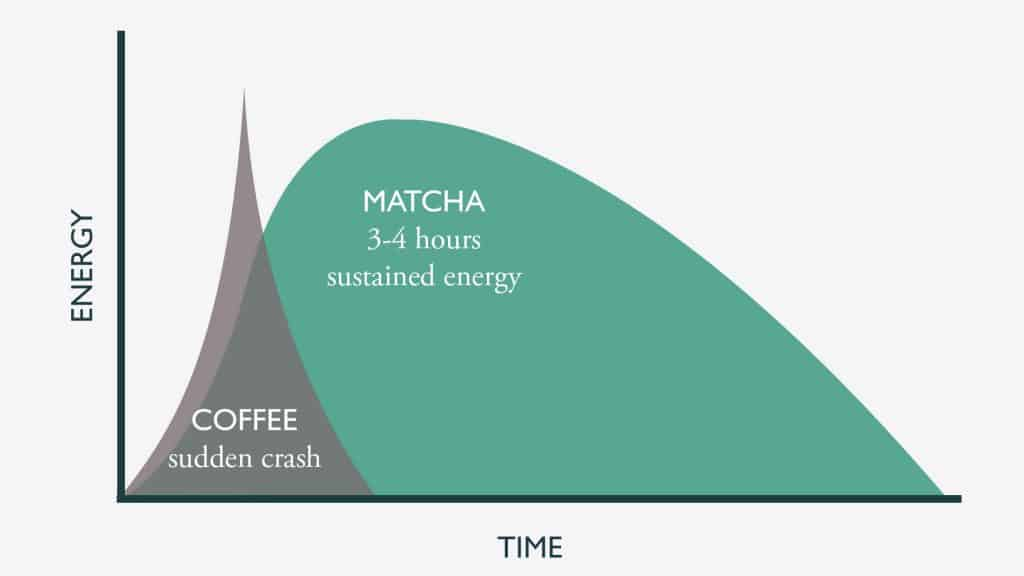
When comparing caffeine in matcha vs coffee, the biggest difference isn’t the amount — it’s how the caffeine behaves in your body.
☕ Coffee Caffeine
- Absorbs quickly, hitting your bloodstream in about 10–15 minutes.
- Provides a fast spike in alertness and energy.
- Can lead to anxiety or restlessness once the caffeine wears off.
🍵 Matcha Caffeine
- Releases slowly over several hours due to the amino acid L-theanine.
- Creates sustained energy and improved focus.
- Helps reduce stress by promoting alpha brain waves (the same kind you experience during meditation!!!)
In short: matcha provides a calm, steady energy; coffee gives you a quick high and an abrupt low. So, when you’re comparing coffee vs matcha caffeine, it’s not just about “how much caffeine” . It’s about how it feels.
Health Benefits of Matcha and Coffee
Both beverages offer unique health perks, but matcha is packed with additional nutrients that make it stand out.
🥇 Benefits of Matcha
- Rich in antioxidants: Matcha contains up to 137 times more antioxidants than regular green tea. These include catechins like EGCG, which help reduce inflammation and protect against cell damage.
- Supports metabolism and detoxification: Chlorophyll gives matcha its vibrant color and helps the body eliminate toxins.
- Promotes calm focus: Thanks to L-theanine, matcha enhances concentration without overstimulation.
- Boosts immunity: The polyphenols in matcha support immune defense and heart health.
☕ Benefits of Coffee
- Improves alertness and performance: Coffee’s quick-acting caffeine helps sharpen focus and reaction time.
- Supports metabolism: Caffeine stimulates fat oxidation, making it a favorite for pre-workout energy.
- Contains antioxidants: Though less than matcha, coffee still contributes to daily antioxidant intake.
- May protect brain health: Regular coffee drinkers have shown lower risks of neurodegenerative diseases in studies.
Ultimately, both drinks contain beneficial compounds.. but if you’re after sustained energy, matcha tends to win.
🔍 Caffeine Content in Matcha vs Coffee
Let’s get specific. Here’s a side-by-side breakdown of how much caffeine each drink actually contains:
| Drink | Average Caffeine (per 8 oz cup) | Type of Energy | Key Benefit |
|---|---|---|---|
| Matcha Tea | 60–80 mg | Slow, steady | Focus & calm |
| Coffee | 90–120 mg | Fast, intense | Alertness & drive |
| Green Tea (regular) | 30–50 mg | Mild | Light refreshment |
While coffee clearly contains more caffeine, the effects of caffeine in matcha last longer and feel smoother. You might not feel as instantly awake — but you’ll avoid the crash that often follows that second or third cup of coffee.
Exactly How Much Caffeine Should You Have?
Experts generally recommend no more than 400 mg of caffeine per day for most adults. That’s about four cups of coffee or five to six cups of matcha.
But remember, not all caffeine is created equal. The effects of caffeine from matcha feel balanced and steady, while coffee’s fast absorption can overstimulate your nervous system.
If you’ve ever experienced coffee jitters, a racing heartbeat, or a sudden afternoon energy crash, your body might respond better to the caffeine in matcha instead.
🍵 How to Make Matcha at Home
Learning how to make matcha properly is a ritual worth mastering. Here’s how to do it like a pro:
- Sift your matcha: Add 1–2 teaspoons of matcha powder into a bowl to remove clumps.
- Add hot water: About 2 oz of water heated to 80°C (not boiling).
- Whisk: Use a bamboo whisk (chasen) to blend until frothy.
- Top up: Add more water or milk for a traditional or matcha latte.
💡 Pro tip: If you prefer a creamy drink, try an oat or almond milk matcha latte — it’s a great alternative to coffee and can still deliver your caffeine fix.
🧠 The Science of Sustained Energy
The magic of matcha vs coffee caffeine lies in how they affect your brain.
Coffee delivers caffeine straight to your central nervous system, stimulating dopamine and adrenaline — great for focus, but also prone to crash.
Matcha’s L-theanine changes that experience entirely. It slows caffeine absorption and boosts alpha brain waves, leading to sustained energy and mental clarity without the spikes.
In essence:
- Coffee = intensity + short-term focus
- Matcha = balance + long-term calm concentration
That’s why many people describe matcha as providing alert calmness — the perfect middle ground between stimulation and serenity.
🥤 Matcha or Coffee for Fitness?
If your goal is physical performance, both drinks have their place.
- Coffee before workouts: boosts adrenaline and improves endurance.
- Matcha before yoga or work: supports mindfulness, hydration, and sustained focus.
Because matcha contains antioxidants and anti-inflammatory compounds, it’s also easier on the stomach and gentler post-exercise than strong black coffee.
So if you’re looking for a smooth energy boost without dehydration, matcha provides an excellent pre- or post-workout option. Additionally, they are amazing drinks for your daily ritual!
🌞 The Bottom Line: Coffee vs Matcha Caffeine
When comparing coffee vs matcha, the key difference lies in how each drink fuels your day. Coffee delivers an immediate jolt of energy — strong, sharp, and short-lived. Matcha offers a balanced flow of caffeine that sustains your energy and enhances focus without overstimulation.
Both drinks can be part of a healthy lifestyle. The best choice comes down to what kind of energy you need:
Fast and bold? Choose coffee.
Calm and focused? Choose matcha.
At Better Blends, we believe it’s not about giving up one for the other — it’s about discovering your perfect balance. Whether you prefer a cozy matcha latte or your classic cup of coffee, both can be part of a mindful, energizing routine that supports your best self.
Hi, this is a comment.
To get started with moderating, editing, and deleting comments, please visit the Comments screen in the dashboard.
Commenter avatars come from Gravatar.